
|
Grade |
Temperature Positioning |
Material / Standard Route |
Core Selection Logic |
|
EPC9258-H |
125°C |
Cross-linked XLPO; high-voltage automotive cable route |
Choose for 125°C EV high-voltage cable requiring balanced heat, abrasion, oil and acid resistance |
|
EPC9508 |
150°C |
Elastomeric cross-linked XLPO; ISO 19642-5 Class D route |
Choose for higher-temperature 150°C EV high-voltage cable requiring an elastomeric material profile |
Product Overview
EPC9258-H and EPC9508 form Opta's cross-linked XLPO material platform for in-vehicle high-voltage cable applications. The two grades address different thermal and mechanical requirements within EV high-voltage wiring, allowing cable manufacturers to select the material route according to temperature class, cable flexibility and the applicable finished-cable specification.
EPC9258-H is positioned for 125°C-class high-voltage automotive cable applications with heat, abrasion, oil and acid resistance requirements. EPC9508 is the higher-temperature elastomeric XLPO option, developed for 150°C in-vehicle high-voltage cable constructions and referenced to ISO 19642-5 Class D requirements.
This combined page keeps the common EV high-voltage application, irradiation-crosslinking and processing information in one place while preserving the distinct technical territory of each grade.
Series Highlights
- Dedicated cross-linked XLPO platform for in-vehicle EV high-voltage cable applications
- Clear 125°C vs 150°C material-selection route
- EPC9258-H emphasizes balanced heat, abrasion, oil and acid resistance
- EPC9508 provides the 150°C elastomeric XLPO route for ISO 19642-5 Class D-oriented cable constructions
- Electron-beam cross-linking after extrusion
- Suitable for customer-specific finished-cable validation and color requirements
- Kept separate from TPE and FRPP high-voltage cable materials to avoid confusing different polymer routes
Typical Applications
- Electric-vehicle in-vehicle high-voltage cables
- Battery-to-inverter and inverter-to-motor high-voltage cable constructions
- High-voltage power distribution wiring inside EVs
- Electric powertrain cable systems
- High-temperature automotive high-voltage wiring
- Orange high-voltage cable constructions where the selected material and finished-cable specification are compatible
125°C or 150°C?
|
Project Requirement |
Recommended Grade |
Selection Reason |
|
125°C high-voltage automotive cable |
EPC9258-H |
Dedicated 125°C cross-linked XLPO route |
|
Higher heat / 150°C requirement |
EPC9508 |
Dedicated 150°C elastomeric XLPO route |
|
ISO 19642-5 Class D-oriented construction |
EPC9508 |
Catalogue explicitly positions EPC9508 for this route |
|
Strong oil / acid / abrasion emphasis at 125°C |
EPC9258-H |
Performance positioning is centered on these requirements |
|
Need TPE or FRPP instead of XLPO |
Use the corresponding TPE / FRPP family |
Do not select EPC9258-H or EPC9508 solely because the application is high-voltage |
XLPO vs Other EV High-Voltage Material Routes
|
Material Route |
Representative Products |
How to Use on Website |
|
Cross-linked XLPO |
EPC9258-H / EPC9508 |
This combined technical detail page |
|
TPE |
STCE59801 |
Separate TPE high-voltage material page; link as an alternative |
|
FRPP |
STCP52501 / STCP52502 / STCP52601 |
Separate FRPP family page; link as alternative |
Technical Comparison
|
Selection Item |
EPC9258-H |
EPC9508 |
|
Primary Application |
EV in-vehicle high-voltage cable |
EV in-vehicle high-voltage cable |
|
Temperature Positioning |
125°C |
150°C |
|
Material Type |
Irradiation-crosslinked XLPO |
Irradiation-crosslinked elastomeric XLPO |
|
Standard / Application Route |
Automotive high-voltage cable; ISO 6722-oriented performance where applicable |
ISO 19642-5 Class D |
|
Key Performance Focus |
Heat, abrasion, oil and acid resistance |
High-temperature + elastomeric mechanical profile |
|
Recommended Irradiation |
10–12 MRad starting range |
10–12 MRad starting range |
|
Cable Layer |
Insulation / application-specific high-voltage wire layer |
Insulation / application-specific high-voltage wire layer |
|
Website Role |
125°C XLPO high-voltage option |
150°C XLPO high-voltage option |
EPC9508 Reference Data from Automotive Catalogue
|
Test Item |
EPC9508 Typical / Test Condition |
|
Density |
1.48 g/cm³ |
|
Tensile Strength |
10.5 MPa |
|
Elongation at Break |
320% |
|
Short-Term Aging |
175°C × 240 h - Pass |
|
Long-Term Aging |
150°C × 3000 h - Pass |
|
Thermal Overload |
200°C × 6 h - Pass |
|
Oxygen Index |
30% |
|
Hardness |
Shore A 88 |
|
Smoke Density - Flaming / Non-Flaming |
75 / 250 |
|
High-Temperature Pressure |
150°C × 4 h |
|
Thermal Deformation |
30% |
|
Low-Temperature Winding @ -40°C |
Pass |
|
Halogen Content |
0 ppm |
|
pH (min.) |
5.6 |
|
Conductivity max. |
0.3 μS/mm |
|
Volume Resistivity |
3.2 × 10¹² Ω·m |
|
Hot Set @ 200°C × 15 min |
80% |
|
Permanent Deformation |
5% |
For EPC9258-H, insert the latest approved numerical TDS table supplied by Opta before website publication so that the combined page preserves the exact grade-specific data rather than copying values from a neighboring automotive grade.
Recommended Extrusion Route
Both grades are processed as irradiation-crosslinkable automotive cable materials. Actual temperature settings should follow the approved grade TDS and be optimized for conductor size, insulation thickness, line speed, surface quality and extrusion equipment.
- Use the approved EPC9258-H / EPC9508 extrusion temperature profile as the starting point.
- Electron-beam irradiation is applied after extrusion; 10–12 MRad can be used as the initial validation range where supported by the grade TDS.
- Optimize irradiation dose against hot-set, aging and finished-cable performance rather than treating one dose as universal.
- Confirm conductor construction, insulation thickness, cable OD and required flexibility before material selection.
- Validate oil, chemical, abrasion, thermal aging and electrical performance on the complete high-voltage cable construction.
- Final compliance with ISO / OEM requirements depends on the complete finished cable, not the raw compound alone.
Color & High-Voltage Cable Identification
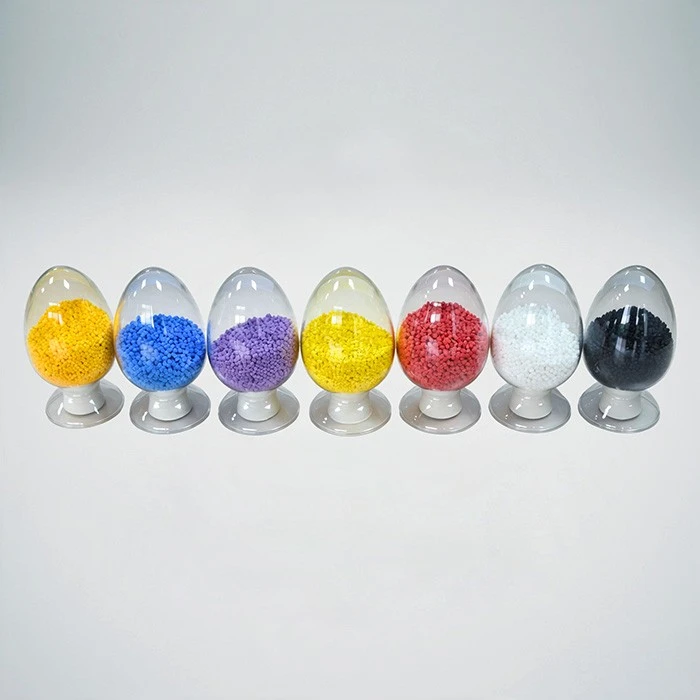
EV high-voltage cables commonly use orange identification, but color and finished-cable requirements should be confirmed against the customer's specification. Opta can evaluate coloring and matching masterbatch solutions according to the selected grade and cable construction.
RFQ & Technical Support
For faster material recommendation, please provide:
- EV high-voltage cable application and vehicle / OEM specification
- Required temperature class: 125°C, 150°C or other
- Applicable standard: ISO 19642, ISO 6722, OEM specification or other
- Required material route: XLPO, TPE, FRPP or open to recommendation
- Conductor size and conductor construction
- Insulation thickness and finished cable OD
- Required flexibility / hardness
- Oil, acid, chemical and abrasion requirements
- Low-temperature and heat-aging requirements
- Extrusion line and electron-beam irradiation equipment
- Required orange / other color
- Trial quantity and estimated annual demand
FAQ
1. What is the main difference between EPC9258-H and EPC9508?
The first selection difference is temperature and material profile: EPC9258-H is the 125°C cross-linked XLPO high-voltage option, while EPC9508 is the 150°C elastomeric cross-linked XLPO option.
2. Which grade is intended for ISO 19642-5 Class D?
EPC9508 is positioned for ISO 19642-5 Class D-oriented in-vehicle high-voltage cable constructions.
3. When should EPC9258-H be selected?
It should be evaluated for 125°C high-voltage automotive cable projects requiring balanced heat, abrasion, oil and acid resistance.
4. Are these the only EV high-voltage cable materials available?
No. TPE and FRPP routes are also available. They should be compared according to the cable design and customer specification rather than merged as identical materials.
5. Why is STCE59801 not included in this page?
STCE59801 is a TPE material. This page is deliberately focused on cross-linked XLPO so the technical and SEO positioning remains clear.
6. Do these materials require irradiation?
They are irradiation-crosslinked material routes. The approved grade TDS and actual finished-cable validation should determine the final irradiation conditions.
7. Can the compounds be colored orange?
Coloring can be evaluated for high-voltage cable identification requirements; the final color specification should be confirmed with the customer.
8. Does raw-material selection guarantee ISO compliance?
No. ISO and OEM compliance must be verified on the complete finished-cable construction.
9. Can samples be supplied?
Yes. Samples can be used for extrusion, irradiation and finished-cable validation.
10. Can Opta help choose between XLPO, TPE and FRPP?
Yes. Providing the cable standard, temperature class, flexibility, chemical resistance and processing route allows a more accurate recommendation.
Hot Tags: ev high-voltage xlpo cable compound, China ev high-voltage xlpo cable compound manufacturers, suppliers, factory, automotive high voltage cable compound, CQC 1103 charging cable material, crosslinked XLPO charging cable compound, electric vehicle cable insulation compound, EV charging cable compounds, EV charging cable material