
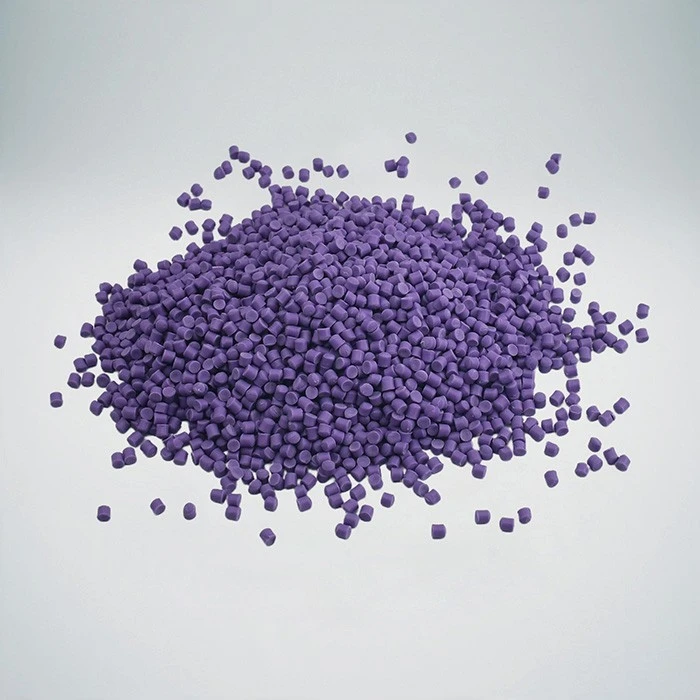
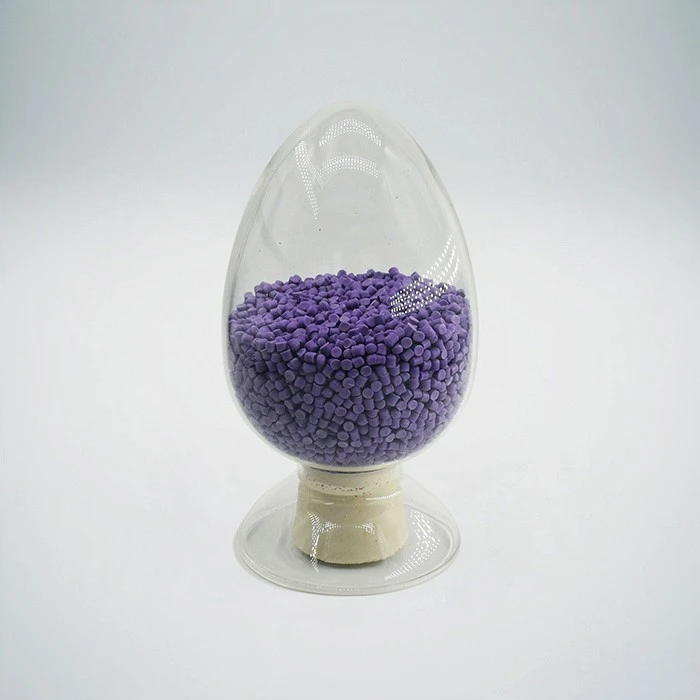
|
Model |
EPC6802 |
|
Product Type |
Low Temperature Flexible LSZH Cable Compound |
|
Material Type |
Thermoplastic LSZH / HFFR |
|
Primary Application |
Cable constructions requiring low-temperature flexibility |
|
Key Positioning |
-55°C low-temperature performance • Flexible • LSZH / HFFR |
|
Typical Mechanical Data |
10.1 MPa tensile strength • 250% elongation |
|
Typical Hardness |
Shore A 90 |
Product Overview
EPC6802 is a Low Temperature Flexible LSZH Cable Compound developed for cable constructions where flexibility must be maintained under low-temperature conditions. The supplied technical data shows passing low-temperature impact at -55°C and 75% low-temperature elongation at -55°C.
As a Low Temperature Flexible LSZH Cable Compound, EPC6802 combines 250% typical elongation, Shore A 90 hardness and halogen-free performance with a clear focus on cold-environment cable applications.
Why Choose EPC6802?
1. Low-Temperature Flexibility
EPC6802 is specifically positioned for cable applications requiring cold flexibility, with low-temperature impact passing at -55°C in the supplied technical data.
2. Flexible Cable Performance
Typical elongation at break is 250%, while low-temperature elongation at -55°C is 75%, supporting flexible cable constructions for cold environments.
3. LSZH / HFFR Material Route
Typical halogen content is 0 ppm and oxygen index is 31%, supporting its LSZH / HFFR positioning.
4. Thermoplastic Processing
EPC6802 is a thermoplastic cable compound and does not require a post-extrusion irradiation step.
5. Cold-Environment Applications
It can be evaluated for outdoor, industrial and electrical cable constructions that may be installed, handled or operated at low temperatures.
6. Extrusion Trial Support
Processing conditions can be optimized according to cable structure, layer thickness, line speed and the required finished-cable flexibility.
Typical Applications
- Cables requiring low-temperature flexibility
- Flexible LSZH / HFFR cable constructions
- Cables installed or handled in cold environments
- Outdoor cable constructions with low-temperature requirements
- Industrial and electrical cables requiring flexible cold performance
- Thermoplastic halogen-free cable applications with low-temperature requirements
- Customized low-temperature flexible cable constructions
Recommended Processing Temperature
|
Zone |
Zone 1 |
Zone 2 |
Zone 3 |
Zone 4 |
Zone 5 |
Neck |
Head |
Mould |
|
Temperature |
100°C |
110°C |
125°C |
135°C |
150°C |
155°C |
160°C |
165°C |
Recommended Processing Conditions
- EPC6802 can be processed on conventional PVC/PE cable extrusion equipment.
- Recommended zone profile: 100°C / 110°C / 125°C / 135°C / 150°C / 155°C / 160°C / 165°C.
- Control melt temperature below 165°C and do not exceed 175°C.
- A low-compression-ratio screw and head are recommended, with CR approximately 1:1.2.
- For special extrusion equipment or low-temperature cable applications, contact the technical team for additional processing guidance.
Technical Data Sheet
|
Test Item |
Typical Value |
Test Method |
|
Density |
1.43 g/cm³ |
ISO 1183-1 |
|
Melt Index |
1.5 g/10 min |
ISO 1133 (b) |
|
Tensile Strength |
10.1 MPa |
IEC 60811-1-1 |
|
Elongation at Break |
250% |
IEC 60811-1-1 |
|
Tensile Strength after Aging |
11.5 MPa |
IEC 60811-1-2 |
|
Elongation after Aging |
209% |
IEC 60811-1-2 |
|
Oxygen Index |
31% |
ISO 4589-2 |
|
Smoke Density - Flaming |
51 |
ASTM E-662 |
|
Smoke Density - Non-Flaming |
193 |
ASTM E-662 |
|
Toxicity Index |
1 |
NES 713 |
|
Hardness |
Shore A 90 |
ASTM D2240 |
|
High-Temperature Pressure Test |
90°C × 4 h |
IEC 60811-3-1 |
|
Thermal Deformation |
25% |
IEC 60811-3-1 |
|
Low-Temperature Impact @ -55°C |
Pass |
IEC 60811-1-4 |
|
Low-Temperature Elongation @ -55°C |
75% |
IEC 60811-1-4 |
|
Thermal Shock @ 130°C |
Pass |
IEC 60811-3-1 |
|
Halogen Content |
0 ppm |
IEC 60754 |
|
pH |
6.2 |
IEC 60754 |
|
Conductivity |
1 μS/mm |
IEC 60754 |
|
Volume Resistivity |
5 × 10¹² Ω·m |
IEC 60093 |
Free Sample & Technical Support
For faster material selection and extrusion trials, please provide:
- Cable type and end-use application
- Intended cable layer
- Minimum installation temperature
- Minimum service temperature
- Required low-temperature bend / impact test
- Required cable flexibility
- Required LSZH / flame-retardant performance
- Cable diameter and layer thickness
- Extrusion equipment and line speed
- Trial quantity and estimated annual volume
FAQ
Q: What is EPC6802?
A: EPC6802 is a Low Temperature Flexible LSZH Cable Compound developed for cable constructions where flexibility must be maintained under low-temperature conditions. The supplied technical data shows passing low-temperature impact at -55°C and 75% low-temperature elongation at -55°C.
Q: What is the main advantage of EPC6802?
A: Its main positioning is low-temperature flexibility combined with a thermoplastic LSZH / HFFR material route.
Q: What applications is EPC6802 suitable for?
A: It can be evaluated for flexible, outdoor, industrial and electrical cable constructions that require flexibility in cold environments.
Q: What low temperature can EPC6802 withstand?
A: The supplied material data shows low-temperature impact passing at -55°C and low-temperature elongation of 75% at -55°C. Finished-cable performance should still be verified against the applicable cable standard.
Q: Is EPC6802 halogen-free?
A: Yes. The supplied technical data lists halogen content of 0 ppm.
Q: Does EPC6802 require irradiation?
A: No. EPC6802 is a thermoplastic cable compound.
Q: Can EPC6802 be processed on conventional extrusion equipment?
A: Yes. The supplied EPC6xxx processing guidance allows processing on conventional PVC/PE cable extrusion equipment.
Q: What information is important for a low-temperature cable project?
A: The minimum installation and service temperature, required bend or impact test, cable construction, layer thickness and flexibility target are important.
Q: Can processing conditions be adjusted for my cable structure?
A: Yes. Extrusion settings should be optimized according to the actual cable structure, equipment, line speed and surface requirements.
Q: Can I request a sample and extrusion support?
A: Yes. Samples and processing guidance can be provided for extrusion trials and finished-cable evaluation.
Hot Tags: low-temperature thermoplastic lszh cable compound, China low-temperature thermoplastic lszh cable compound manufacturers, suppliers, factory, Cold Resistant LSZH Cable Compound, Flame Retardant Thermoplastic Cable Jacket Compound, halogen free elastomer wire compound, Low Heat Shrinkage LSZH Sheathing Compound, Low Temperature Flexible LSZH Cable Compound, Low Water Absorption Cable Insulation