

|
Item |
EPC6801 |
|
Material Type |
Flexible thermoplastic low-smoke zero-halogen cable compound |
|
Material Positioning |
Halogen-free elastomer / flexible LSZH compound |
|
Processing |
Thermoplastic extrusion; no irradiation cross-linking required |
|
Primary Advantage |
Soft hand feel and high flexibility |
|
Typical Use |
Flexible cable insulation / sheathing and soft-PVC replacement applications |
|
Tensile Strength |
9.1 MPa |
|
Elongation at Break |
300% |
|
Oxygen Index |
30% |
|
Hardness |
Shore A 89 |
|
Low-Temperature Impact |
Pass at -25°C |
Product Overview
EPC6801 is a flexible thermoplastic low-smoke zero-halogen cable compound developed for cable constructions that require a softer hand feel and greater flexibility than conventional rigid LSZH formulations. It can be considered for flexible wire and cable applications and for projects seeking a halogen-free alternative to soft PVC.
The grade combines Shore A 89 hardness with 300% elongation at break, while maintaining flame-retardant and low-smoke halogen-free characteristics. Because EPC6801 is thermoplastic, it can be extruded directly without a subsequent irradiation cross-linking step.
Its role within the EPC6xxx family is clear: EPC6907 is the general-purpose LSZH sheathing grade, EPC6802 is the low-temperature flexible grade, while EPC6801 is the softer elastomeric option where cable flexibility and hand feel are key selection factors.
Key Features
- Soft & Flexible Cable Material
Shore A 89 hardness and 300% elongation provide a softer, more flexible profile for cable constructions requiring improved hand feel.
- Halogen-Free Formulation
Measured halogen content is 0 ppm in the supplied product data, supporting halogen-free cable-material positioning.
- Low-Smoke Performance
Smoke-density data are available for both flaming and non-flaming test conditions.
- Flame-Retardant Performance
An oxygen index of 30% provides a useful flame-retardant baseline for flexible LSZH cable applications.
- Thermoplastic Processing
No irradiation step is required, simplifying processing compared with cross-linked XLPO products.
- Alternative to Soft PVC
Suitable for projects seeking flexible halogen-free cable compounds as an alternative to conventional soft PVC.
- Thermal & Mechanical Balance
Provides 9.1 MPa tensile strength, 300% elongation, heat-aging retention and thermal-shock performance.
Typical Applications
- Flexible electrical wires and cables
- Flexible cable insulation
- Flexible cable sheathing / jacketing
- Internal equipment wiring requiring a softer cable feel
- Low-smoke zero-halogen flexible cable constructions
- Projects replacing soft PVC with a halogen-free thermoplastic compound
- General flexible wire applications where -25°C impact performance is sufficient
Recommended Extrusion Process Temperature
|
Test Item |
EPC6801 |
Test Method |
|
Density |
1.42 g/cm³ |
ISO 1183-1 |
|
Melt Index |
5.8 g/10 min |
ISO 1133 (b) |
|
Tensile Strength |
9.1 MPa |
IEC 60811-1-1 |
|
Elongation at Break |
300% |
IEC 60811-1-1 |
|
Tensile Strength after Aging |
10.5 MPa |
IEC 60811-1-2 |
|
Elongation after Aging |
259% |
IEC 60811-1-2 |
|
Oxygen Index |
30% |
ISO 4589-2 |
|
Smoke Density - Flaming |
89 |
ASTM E-662 |
|
Smoke Density - Non-Flaming |
245 |
ASTM E-662 |
|
Toxicity Index |
1 |
NES 713 |
|
Hardness |
Shore A 89 |
ASTM D2240 |
|
High-Temperature Pressure Test |
80°C × 4 h |
IEC 60811-3-1 |
|
Thermal Deformation |
35% |
IEC 60811-3-1 |
|
Low-Temperature Impact @ -25°C |
Pass |
IEC 60811-1-4 |
|
Thermal Shock @ 130°C |
Pass |
IEC 60811-3-1 |
|
Halogen Content |
0 ppm |
IEC 60754 |
|
pH (min.) |
6.0 |
IEC 60754 |
|
Conductivity (max.) |
1.2 μS/mm |
IEC 60754 |
|
Volume Resistivity |
7 × 10¹² Ω·m |
IEC 60093 |
What the Data Means for Buyers
|
Selection Concern |
EPC6801 Positioning |
|
Cable flexibility |
Soft elastomeric LSZH option; Shore A 89 |
|
Mechanical flexibility |
300% elongation at break |
|
Low-temperature use |
Passes -25°C impact; for colder conditions compare EPC6802 |
|
Halogen requirement |
0 ppm in supplied product data |
|
Flame retardancy |
Oxygen index 30% |
|
Processing route |
Direct thermoplastic extrusion; no E-beam cross-linking |
|
PVC replacement |
Designed as a flexible halogen-free alternative for suitable soft-PVC applications |
How to Select the Right Thermoplastic LSZH Grade
|
Grade |
Primary Positioning |
Key Difference |
Choose When |
|
EPC6907 |
LSZH sheathing |
Balanced processability, flame retardancy and flexibility |
You need a general cable sheath; also applicable to communication / marine projects when the construction requirements match |
|
EPC6901 |
LSZH insulation |
Higher insulation focus and low water absorption |
Electrical insulation is the main function |
|
EPC6909 |
Oxygen-barrier compound |
High char formation / low heat-release positioning |
A cable oxygen-barrier layer is required |
|
EPC6902 |
Injection-molding compound |
Very high melt flow |
Connectors, plugs or molded cable parts are required |
|
EPC6801 |
Flexible elastomeric LSZH |
Soft feel, Shore A 89, 300% elongation |
Flexibility and soft-PVC replacement are priorities |
|
EPC6802 |
Low-temperature flexible LSZH |
Passes -55°C impact; -55°C elongation data |
Very-low-temperature flexibility is the main requirement |
Recommended Extrusion Process
|
Zone |
1 |
2 |
3 |
4 |
5 |
Neck |
Head |
Mould |
|
Temperature |
100°C |
110°C |
125°C |
135°C |
150°C |
155°C |
160°C |
165°C |
- EPC6801 can be produced on conventional PVC/PE cable extrusion equipment.
- Recommended melt temperature: 165°C; do not exceed 175°C.
- A low-compression screw and head are recommended, with a compression ratio of approximately 1:1–1:2.
- Actual settings should be optimized according to cable structure, extrusion speed, wall thickness and surface-quality requirements.
Storage & Drying
When the original sealed packaging is intact, special drying is normally not required. If the material has been stored for an extended period in a humid environment, dry at approximately 70°C for 4 hours in a dehumidifying dryer before processing.
Color & Customization
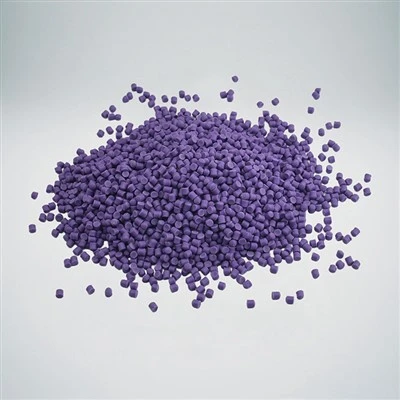
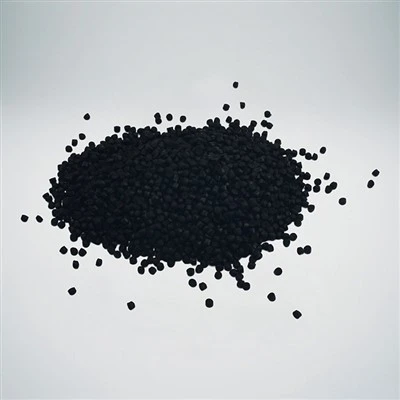
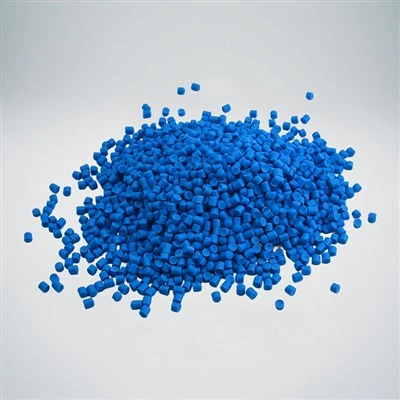
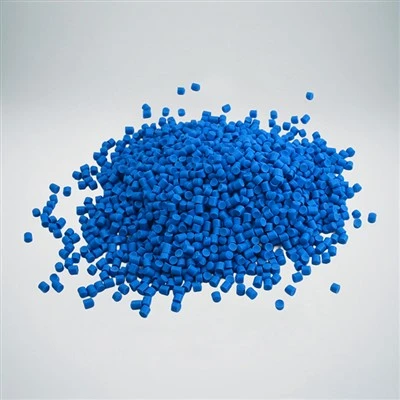
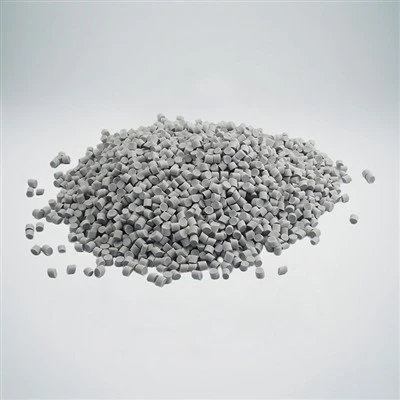
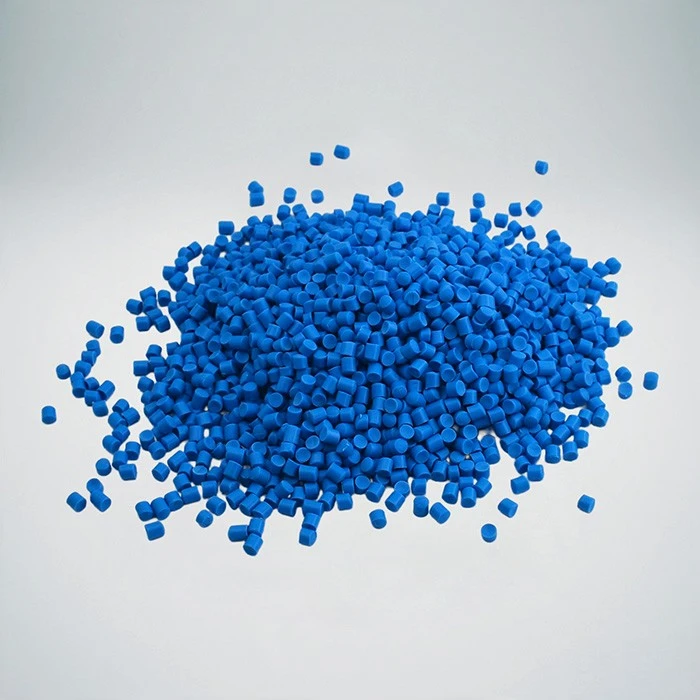
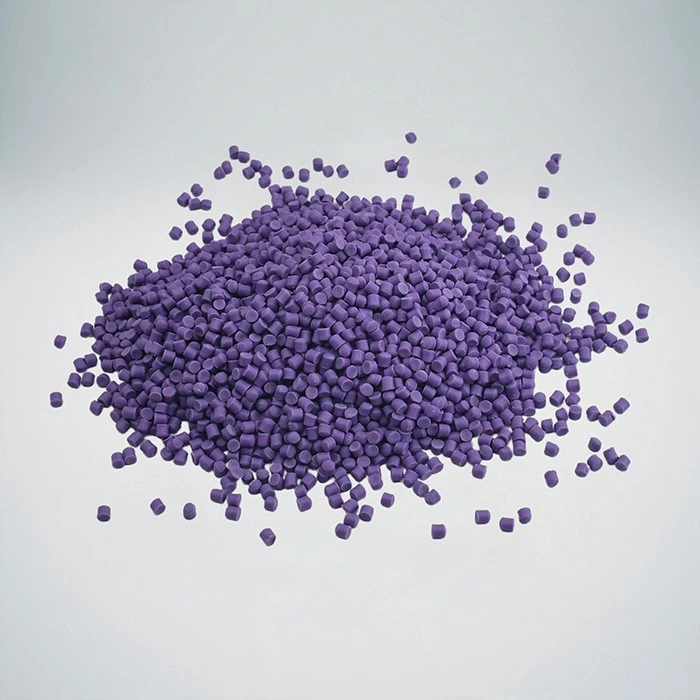
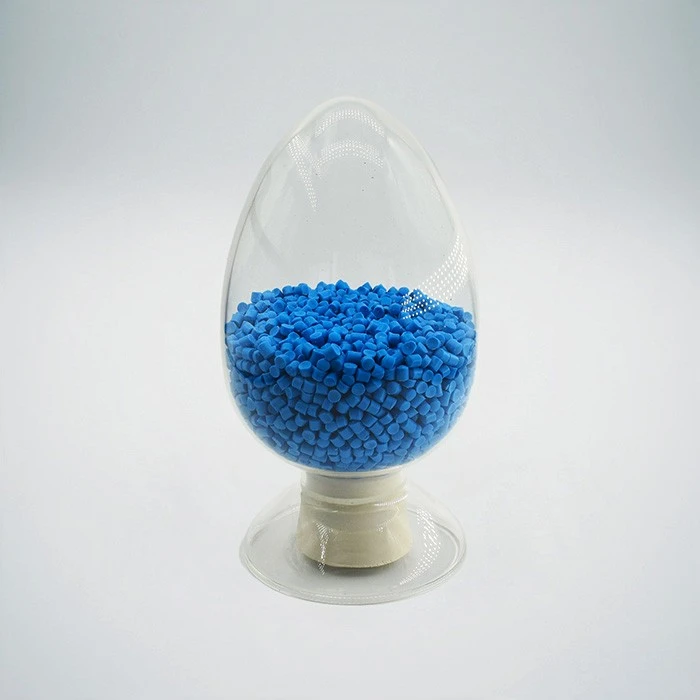
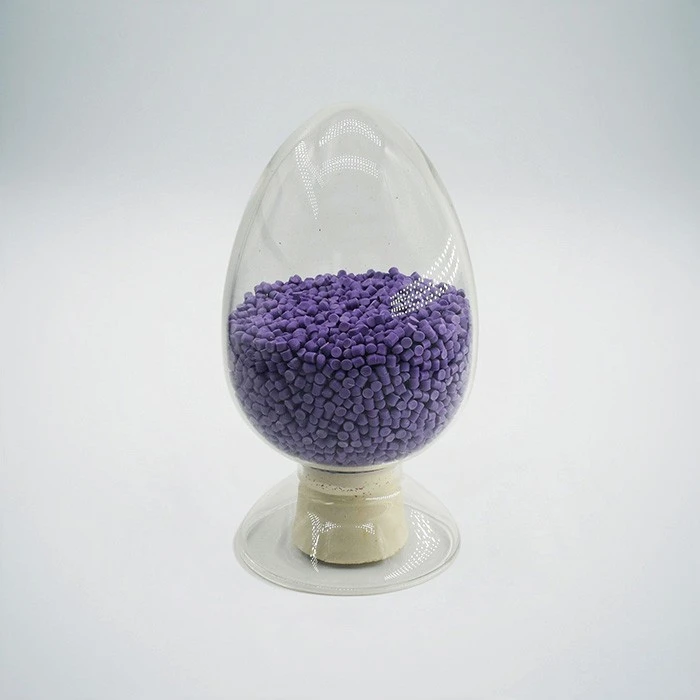
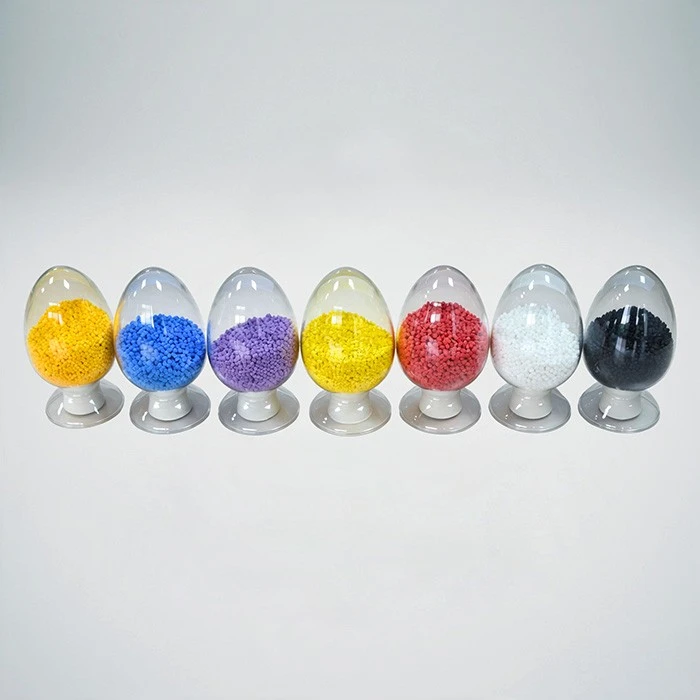
- Natural-color material can be colored according to project requirements.
- Color masterbatch solutions can be supplied for matching requirements.
- Customized formulation evaluation can be discussed for specific cable constructions.
- Technical support is available for extrusion trials and material selection.
- Samples can be provided for qualified projects.
RFQ: Information That Helps Us Recommend Faster
- Cable / wire application and end-use environment
- Insulation or sheathing function
- Required flexibility or target Shore hardness
- Required operating and low-temperature range
- Required flame-retardant / smoke / halogen standard
- Conductor size, insulation or sheath thickness and finished OD
- Target tensile strength and elongation
- Extrusion equipment and line speed
- Color requirement
- Trial quantity and estimated annual demand
FAQ
Q: What is EPC6801?
A: EPC6801 is a flexible thermoplastic low-smoke zero-halogen cable compound with an elastomeric, softer profile for flexible cable applications.
Q: Is EPC6801 cross-linked?
A: No. EPC6801 is a thermoplastic compound and does not require electron-beam irradiation after extrusion.
Q: Can EPC6801 replace soft PVC?
A: It can be evaluated as a halogen-free flexible alternative to soft PVC where the cable's complete performance requirements are compatible.
Q: What is the main difference between EPC6801 and EPC6802?
A: EPC6801 emphasizes soft feel and general flexibility, while EPC6802 is the stronger choice when very-low-temperature flexibility is required, including -55°C impact performance.
Q: What is the hardness of EPC6801?
A: Typical hardness is Shore A 89.
Q: What is its elongation at break?
A: Typical elongation at break is 300%.
Q: Is EPC6801 halogen-free?
A: The supplied product table reports 0 ppm halogen content according to IEC 60754 testing.
Q: Can EPC6801 be used for both insulation and sheathing?
A: It can be evaluated for flexible insulation and sheathing applications. Final suitability should be confirmed against the specific cable standard and construction.
Q: Does it need drying?
A: Normally not when sealed packaging is intact. After extended humid storage, approximately 70°C for 4 hours in a dehumidifying dryer is recommended.
Q: Can I request a sample?
A: Yes. A sample can be used to evaluate extrusion, flexibility, surface quality and finished-cable performance.
Need a Flexible Halogen-Free Alternative to Soft PVC?
Send us your cable application, flexibility target, temperature range, required standards and cable construction. Our technical team can help evaluate EPC6801 or recommend a more suitable grade.
Hot Tags: flexible thermoplastic lszh cable compound, China flexible thermoplastic lszh cable compound manufacturers, suppliers, factory, Cold Resistant LSZH Cable Compound, Flame Retardant Cable Barrier Material, HFFR Injection Molding Material, Low Smoke Zero Halogen Insulation Material, Low Temperature Flexible LSZH Cable Compound, Thermoplastic HFFR Insulation Compound