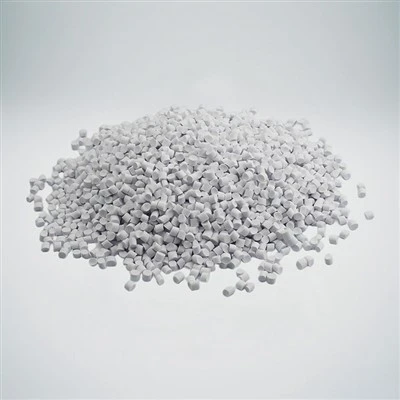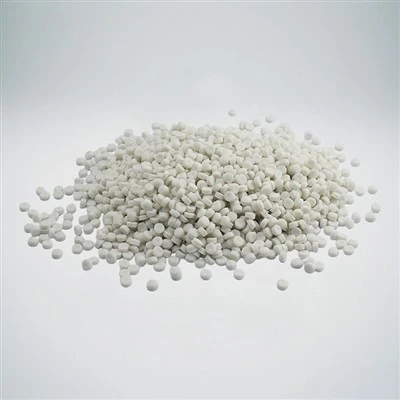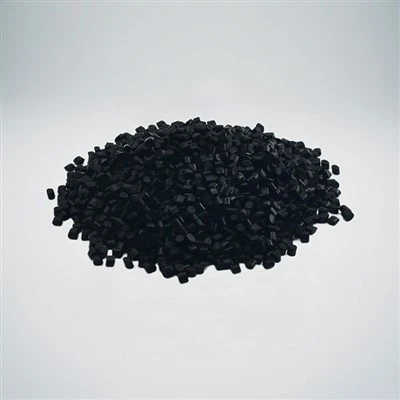


The performance of flame - retardant TPE cable compound is crucial for ensuring the safety and functionality of cables in various applications. As a supplier of flame - retardant TPE cable compound, I have witnessed firsthand the significance of several factors that can influence its performance. In this blog, we will explore these factors in detail.
Raw Material Quality
The quality of raw materials is the foundation of high - performance flame - retardant TPE cable compound. Thermoplastic elastomers (TPE), the base material, come in different grades and formulations. High - quality TPEs offer better mechanical properties, such as flexibility and resilience. For example, some TPEs with unique molecular structures can provide excellent elongation at break, which is essential for cables that need to withstand bending and stretching during installation and use.
Flame retardants are another key component. Different types of flame retardants, including halogen - based and halogen - free flame retardants, have distinct characteristics. Halogen - based flame retardants are known for their high flame - retardant efficiency but may pose environmental and health risks. In contrast, halogen - free flame retardants are more environmentally friendly, although they may require higher loading levels to achieve the same level of flame retardancy. The purity and particle size of flame retardants also matter. Finer particles can disperse more evenly in the TPE matrix, enhancing the overall flame - retardant performance.
Fillers are often added to improve mechanical and thermal properties. For instance, adding glass fibers can increase the stiffness and strength of the cable compound. However, the quality of fillers, such as their aspect ratio and surface treatment, can significantly affect how well they integrate with the TPE matrix. Poor - quality fillers may lead to agglomeration, reducing the compound's performance and causing weaknesses in the cable.
Formulation Design
The way different raw materials are combined in the formulation is a critical factor. The ratio of TPE to flame retardants and fillers needs to be carefully optimized. If there is too much flame retardant, it can make the compound brittle and reduce its mechanical performance. On the other hand, if the amount is insufficient, the flame - retardant requirements may not be met.
Compatibility between different components is also crucial. Raw materials that are not compatible may phase - separate during processing, resulting in non - uniform properties throughout the cable compound. For example, some flame retardants may have poor compatibility with certain TPEs, leading to issues such as surface blooming or reduced adhesion between the layers of the cable.
To address these challenges, formulators often use additives. Coupling agents can enhance the adhesion between fillers and the TPE matrix, improving the mechanical properties of the compound. Lubricants are used to improve the processability of the compound during extrusion and molding. The choice and dosage of additives need to be carefully determined based on the specific requirements of the cable compound.
Processing Technology
The processing technology used to manufacture flame - retardant TPE cable compound can have a profound impact on its performance. Extrusion is one of the most common processes. The temperature profile during extrusion is critical. If the temperature is too high, it can cause thermal degradation of the TPE and flame retardants, reducing their effectiveness and changing the mechanical properties of the compound. Conversely, if the temperature is too low, the compound may not melt uniformly, resulting in poor dispersion of the components and inconsistent product quality.
The screw speed and pressure in the extruder also play important roles. A higher screw speed can improve the mixing efficiency of the raw materials, but it may also generate more heat. Adequate pressure is required to ensure that the compound is properly compacted and has a dense structure.
In addition to extrusion, post - processing steps such as cooling and annealing can affect the final performance of the cable compound. Rapid cooling can cause internal stresses in the compound, which may lead to cracking or reduced mechanical properties over time. Annealing can help relieve these stresses and improve the dimensional stability of the cable.
Environmental Conditions
The performance of flame - retardant TPE cable compound can be affected by the environmental conditions in which the cables are used. Temperature is a significant factor. High temperatures can accelerate the degradation of the TPE and flame retardants, reducing the flame - retardant and mechanical properties of the compound. In extreme heat conditions, the compound may soften and lose its shape, increasing the risk of short - circuits and fires.
Humidity can also impact the performance. Moisture can penetrate the cable compound and cause hydrolysis of the TPE or corrosion of metal components in the cable. This can lead to a decrease in the mechanical strength and electrical insulation properties of the cable.
Exposure to chemicals, such as solvents, acids, and alkalis, can also damage the flame - retardant TPE cable compound. Chemical reactions between the compound and these substances can break down the molecular structure of the TPE and flame retardants, resulting in a significant reduction in performance.
Application Requirements
The specific application requirements of the cables also influence the performance of the flame - retardant TPE cable compound. For Electronic and Data Wire TPE Compound, flexibility and low electrical interference are often crucial. The compound needs to be able to bend easily around tight corners without cracking, and it should not interfere with the transmission of electronic signals.
In the case of Electronic and HV TPE Cable Compound, high - voltage resistance and good insulation properties are essential. The compound must be able to withstand high electrical stresses without breaking down, ensuring the safe operation of high - voltage electrical systems.
Different industries may also have specific standards and regulations regarding the performance of flame - retardant TPE cable compounds. For example, the automotive industry may require cables to meet certain flame - retardancy and mechanical property standards to ensure the safety of vehicles.
Conclusion
In conclusion, the performance of flame - retardant TPE cable compound is affected by multiple factors, including raw material quality, formulation design, processing technology, environmental conditions, and application requirements. As a supplier, we understand the importance of carefully controlling these factors to produce high - quality cable compounds.
If you are in the market for flame - retardant TPE cable compound and want to discuss your specific requirements, we are here to provide you with professional advice and high - performance products. We can work together to develop the most suitable solution for your applications.
References
- X. Zhang, et al. "Effect of Flame Retardants on the Thermal and Mechanical Properties of Thermoplastic Elastomers". Polymer Science Journal, 20XX.
- Y. Wang, et al. "Processing Optimization of Flame - Retardant TPE Cable Compounds". Journal of Materials Processing Technology, 20XX.
- Z. Li, et al. "Environmental Impact on the Performance of Flame - Retardant Cables". Environmental Science and Technology, 20XX.