
|
Temperature |
Flame Target |
Halogen Positioning |
Processing Signature |
|
150°C |
VW-1 |
Low Halogen / Low Smoke |
High Flow, MI 28 g/10 min |
150°C | Low Halogen | VW-1 Target | MI 28 | 480% Elongation | E-Beam
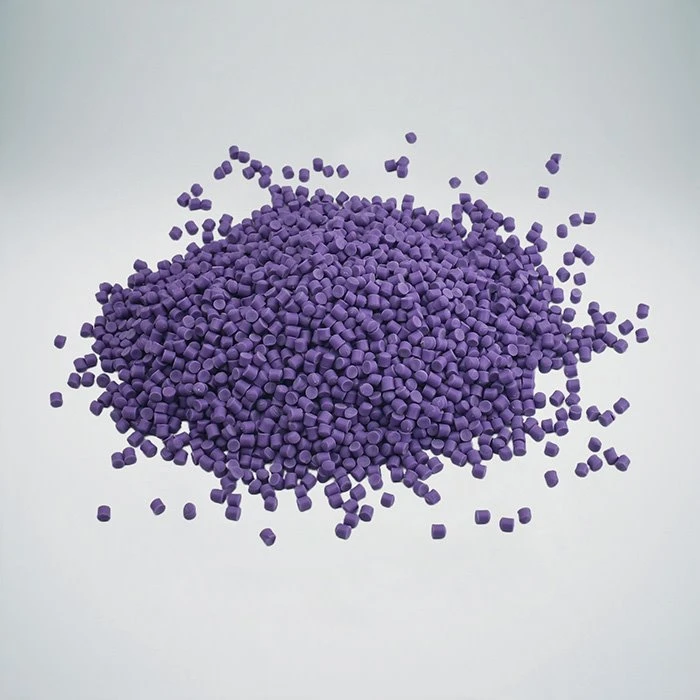
LFR9502 is a developed for high-temperature wire insulation where a 150°C thermal class, VW-1 vertical-flame positioning and a low-halogen formulation are required together. Its combination of 28 g/10 min melt index and 480% post-irradiation elongation gives the grade a distinctive processing and mechanical profile for demanding wire constructions.
The strongest differentiation of this 150°C UL VW-1 Low-Halogen XLPO Compound is the combination of high-temperature service and high-flow processing. Typical tensile strength is 16.5 MPa and elongation at break is 480%; after 180°C × 168 h aging, typical values are 18.2 MPa and 395%. This makes LFR9502 the dedicated 150°C VW-1 low-halogen route within the cross-linked XLPO family.
LFR9502 Performance Signature
- 150°C low-smoke, low-halogen XLPO insulation platform.
- VW-1-oriented vertical-flame positioning for finished-wire constructions.
- High melt flow: MI 28 g/10 min for extrusion-focused high-temperature projects.
- Very high post-irradiation elongation: 480%.
- Strong aged elongation retention: 395% after 180°C × 168 h.
- 16.5 MPa typical tensile strength after irradiation.
- Typical volume resistivity of 1.5 × 10¹³ Ω·m.
Why LFR9502 for 150°C VW-1 Wire?
- 150°C + VW-1 + low halogen is the core application territory, separating LFR9502 from the 150°C zero-halogen FT-2 route.
- MI 28 high-flow behavior gives the grade a strong processing identity for fine-wall and compact wire insulation designs.
- 480% elongation provides substantial flexibility and mechanical margin after irradiation.
- 180°C × 168 h aging with 395% retained elongation supports demanding high-temperature wire qualification.
Typical Applications
- 150°C electronic hook-up wire
- High-temperature appliance and equipment wiring
- Motor lead and equipment connection wire
- Industrial electrical and control wire
- Fine-wall or flexible 150°C low-halogen wire constructions targeting VW-1 performance
High Temperature and High Flow Must Be Balanced
LFR9502 combines a 150°C material platform with a relatively high melt index of 28 g/10 min. This creates a different extrusion challenge from lower-flow high-temperature compounds: line speed, draw-down, conductor centering, wall-thickness stability and cooling must be balanced so that the insulation remains dimensionally consistent before irradiation. The goal is a repeatable process window that can then be validated through heat aging, hot-set and finished-wire VW-1 testing.
Typical Technical Data
|
Property |
Typical Value |
|
Density |
1.33 g/cm³ |
|
Melt Index |
28 g/10 min |
|
Tensile Strength |
16.5 MPa |
|
Elongation at Break |
480% |
|
Heat Aging |
180°C × 168 h |
|
Tensile after Aging |
18.2 MPa |
|
Elongation after Aging |
395% |
|
Oxygen Index |
32% |
|
Hardness |
Shore A 95 |
|
High-Temperature Pressure |
121°C × 1 h |
|
Thermal Deformation |
31% |
|
Low-Temperature Impact |
Pass @ -25°C |
|
Thermal Shock |
Pass @ 150°C |
|
Volume Resistivity |
1.5 × 10¹³ Ω·m |
|
Hot Set |
60% @ 200°C × 15 min |
|
Permanent Deformation |
6% |
Recommended Trial Sequence
1. Confirm the 150°C temperature class, VW-1 target and acceptance of a low-halogen formulation.
2. Establish extrusion conditions around the MI 28 high-flow profile, with close control of wall thickness and centering.
3. Check insulation surface quality and dimensional stability before irradiation.
4. Apply electron-beam crosslinking; use 10-12 MRad as the recommended starting range.
5. Verify hot-set, tensile, elongation and 180°C × 168 h aging retention.
6. Complete VW-1 testing on the finished wire before finalizing production parameters.
Project Trial & Technical Support
For LFR9502 trials, please provide the target 150°C wire standard, conductor size, insulation thickness, VW-1 requirement, acceptable halogen level, extrusion-line information and irradiation conditions. Technical support can focus on high-flow extrusion stability, heat-aging retention, irradiation and finished-wire flame evaluation.
FAQ
1. What is the main positioning of LFR9502?
LFR9502 is a 150°C low-smoke, low-halogen irradiation-crosslinked XLPO compound for high-temperature wire insulation constructions targeting VW-1 vertical-flame performance.
2. Is LFR9502 zero halogen?
No. LFR9502 should be positioned as low halogen, not zero halogen or LSZH.
3. What makes LFR9502 different from EPC9502?
Both are positioned at 150°C. LFR9502 is the low-halogen VW-1 high-flow route, while EPC9502 is the zero-halogen FT-2 route.
4. Why is the melt index important?
The typical melt index is 28 g/10 min, giving LFR9502 relatively high flowability for wire-insulation extrusion and making process control an important part of project qualification.
5. What are the typical mechanical properties?
Typical post-irradiation tensile strength is 16.5 MPa and elongation at break is 480%.
6. How does LFR9502 perform after heat aging?
After 180°C × 168 h aging, typical tensile strength is 18.2 MPa and elongation is 395%.
7. What flame performance is LFR9502 designed for?
It is positioned for finished-wire constructions targeting VW-1 vertical-flame performance. Final results depend on the complete wire construction and processing.
8. Which applications fit LFR9502 best?
150°C electronic hook-up wire, high-temperature appliance and equipment wiring, motor lead wire and other low-halogen VW-1-oriented constructions.
Hot Tags: 150°c ul vw-1 low-halogen xlpo compound, China 150°c ul vw-1 low-halogen xlpo compound manufacturers, suppliers, factory, 105 C High Flame Retardant LSZH Cable Compound, 105 C irradiation cross linked LSZH, 150 C XLPO Cable Compound, crosslinked polyolefin VW 1 material, E beam crosslinked VW 1 insulation, WDZ YJ J125 Cable Compound