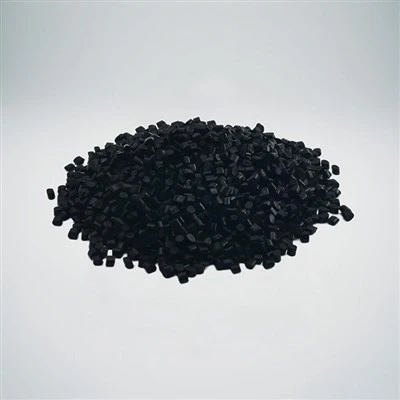


If you’ve ever worked with PE (polyethylene) cable compounds—whether you’re a cable manufacturer, project engineer, or someone who just wants to know why those power lines and networking cables don’t crack or crumble after a few years—you’ve probably wondered what makes them hold up so well. Let’s cut to the chase: antioxidants are the unsung heroes here, and if you’re sourcing these compounds for your next project, getting this right isn’t just a small detail—it’s what keeps your cables from failing prematurely. I’ve been in the PE cable compounds game for over a decade, and I can’t tell you how many times a client has come to me saying, “My cables are cracking in 2 years, what did I do wrong?” Most of the time? It’s a missing or improperly dosed antioxidant.
First, let’s ground this in some basic science, no stuffy textbook jargon. PE is a polyolefin plastic—light, flexible, cheap to make, and perfect for coating cables—but it has a flaw: it hates heat, oxygen, and UV light. When PE is exposed to these things, its long polymer chains break down over time. That process is called oxidation, and it’s like a acid eating away at the plastic. Imagine your favorite hoodie getting worn thin at the seams: that’s basically what’s happening to the PE cable sheathing. The polymer chains get shorter, which makes the plastic brittle, discolored, and eventually unable to protect the wires inside. That’s where antioxidants come in. Their whole job is to interrupt that oxidation cycle before it starts.
Let me break down how that works in plain terms. Oxidation happens in two main steps: initiation and propagation. Initiation is when an oxygen molecule snatches a hydrogen atom from a PE polymer chain, creating a free radical. That free radical is super unstable, so it immediately grabs another atom from a nearby polymer chain, making a new free radical and a chain that’s now damaged. Propagation is when this cycle keeps going, one radical after another, until you have a bunch of broken chains. Antioxidants stop this chain reaction dead in its tracks. There are two main types that work together here: primary (or chain-breaking) antioxidants and secondary (or preventive) antioxidants.
Primary antioxidants are like the bouncers at a club—they take out the bad free radicals. They donate a hydrogen atom to the unstable free radical, turning it into a stable molecule that can’t attack other polymer chains. Secondary antioxidants are more like the cleaners: they catch the hydroperoxides (the other byproduct of oxidation) that primary antioxidants might miss, turning them into harmless stuff before they can form new free radicals. Together, they create a two-layer defense system that makes the PE compound last way longer than it would on its own.
Now, why does this matter specifically for PE cable compounds, not just regular PE plastic? Cable sheathing isn’t just sitting on a shelf—it’s outside, 24/7, exposed to hot summers, cold winters, sun, and sometimes even industrial fumes. If you’re making a power cable for a substation, that’s not just a residential cable: it’s carrying high voltage, so the sheathing has to be tough enough to resist heat from the wires inside, too. I once worked on a project for a utility company in the Southwest US where the original compound they used had too little antioxidant. Within 3 years, their lines were cracking so bad they had to replace 10 miles of cable at a cost of over $2 million. That’s the kind of cost you avoid when you get the antioxidant dosage right.
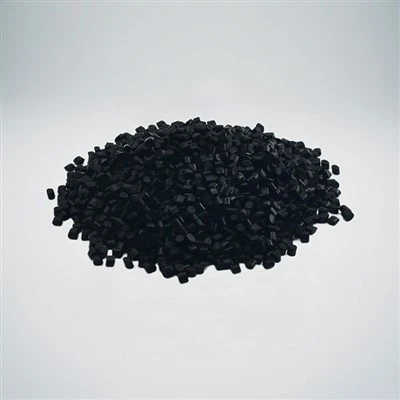
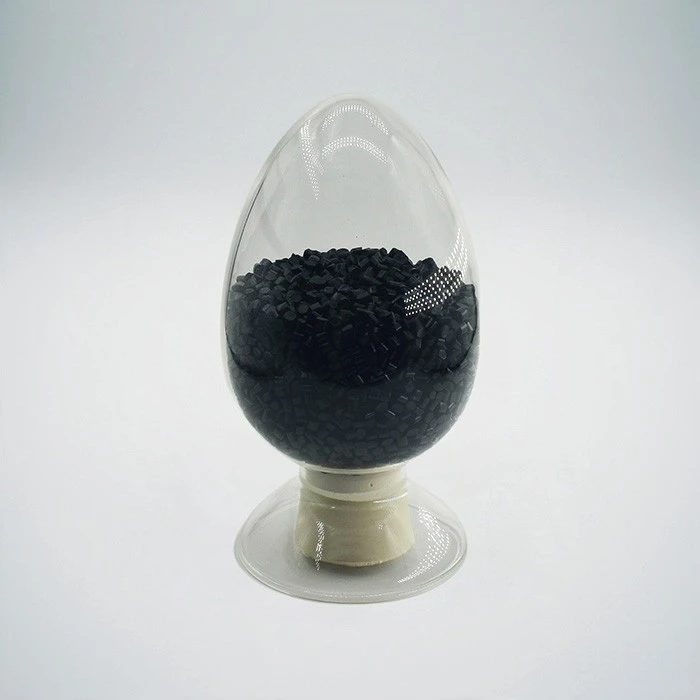
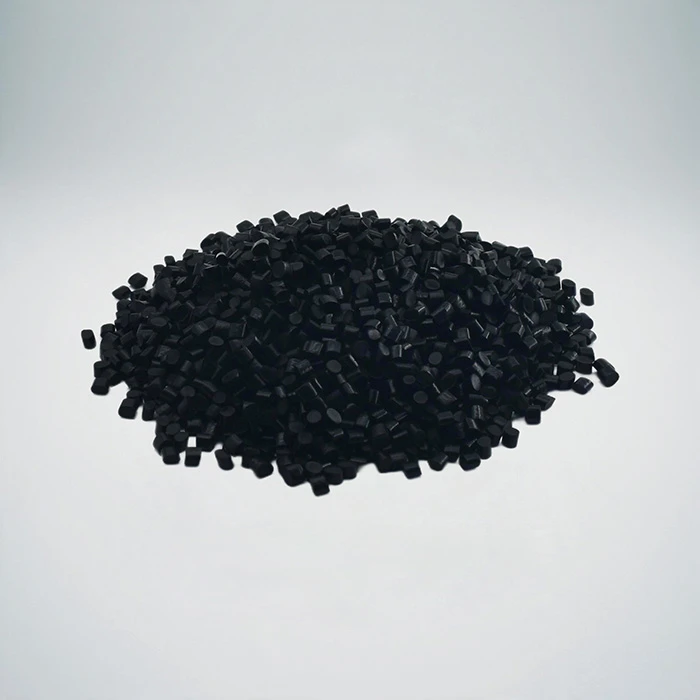
Here’s the thing: not all PE cable compounds are the same, and antioxidant needs change depending on the type of PE you’re using. For example, black LLDPE (linear low-density polyethylene) is super common for outdoor cable sheathing because it’s flexible and resistant to tearing. LLDPE has slightly different polymer chain structure than HDPE, so it oxidizes a bit differently. That means you can’t just use the same antioxidant dose you’d use for HDPE—you have to adjust it to match the resin’s specific chemistry. If you’re looking for a high-quality black LLDPE compound for your next outdoor cable project, you can check out our Black LLDPE Cable Sheathing Compound page, where we formulate the antioxidant package specifically for that resin type.
Then there’s black HDPE (high-density polyethylene), which is stiffer and often used for underground cables or industrial power lines. HDPE has longer polymer chains, so it’s a bit more resistant to oxidation on its own, but it still needs the right antioxidant mix to handle the constant heat and moisture underground. Too much antioxidant, and it can make the sheathing sticky or reduce its mechanical strength; too little, and you get brittleness. Our Black HDPE Cable Sheathing Compound is formulated with exactly that balance, so our clients don’t have to guess at dosages or risk quality issues.
Wait, some of you might be thinking: “What about carbon black?” A lot of people mix up antioxidants and carbon black, because most cable compounds are black. Carbon black does help with UV resistance— that’s why car tires are black, right? It absorbs UV light so it doesn’t break down the PE. But carbon black doesn’t do anything against heat or oxygen oxidation. That’s still the antioxidant’s job. I see this mistake all the time: clients add extra carbon black thinking it’ll fix brittleness, and it doesn’t. It just makes the cable blacker. Antioxidants are non-negotiable for long-term durability, regardless of the color (though black is standard for most outdoor cables).
Another factor that changes antioxidant needs is processing. When you’re extruding PE cable compounds to coat wires, you have to heat the resin up to 180–220°C to melt it. That heat is enough to start oxidation during processing, so the antioxidant has to work even while you’re making the cable, not just after it’s installed. If the antioxidant breaks down during extrusion, it can’t protect the cable later. That’s why we choose antioxidants with high thermal stability—they don’t degrade at processing temperatures, so they’re ready to go once the cable is in the ground or hung on a pole.
What about over time? Let’s say your cable is sitting in a warehouse for 6 months before being installed. Will the antioxidant still work? If it’s formulated correctly, yes. Antioxidants are designed to migrate slowly to the surface of the PE compound, which is where oxygen attacks the most. That “blooming” effect (when you see a slight powdery layer on the surface) is actually a good thing—it means the antioxidant is doing its job, moving to where it’s needed. If you don’t get that balance right, the antioxidant either stays inside the compound and can’t reach the surface, or it blooms too much and leaches out too quickly.
I’ve had clients ask me: “Can I just use a cheaper antioxidant to cut costs?” And my answer is always: don’t. The cheap antioxidants often have lower thermal stability, or they’re not formulated to work with LLDPE or HDPE. A $0.01 saving per kg of compound can turn into hundreds of thousands in replacement costs down the line. I learned this early on when a small cable maker used a cut-rate compound for a rural fiber optic project. Within 5 years, half the cables were cracked, and they had to replace every single one because fiber optic cables can’t be spliced as easily as power cables. That experience stuck with me—formulating the right antioxidant package isn’t just a spec, it’s a promise.
So what should you look for in a PE cable compound when it comes to antioxidants? First, ask the supplier what type of antioxidants they use, and what the dosage is. A reputable supplier will be able to tell you exactly that, not just say “it has antioxidants.” Second, make sure the antioxidant package is matched to the PE resin type: LLDPE vs. HDPE, for example. Third, ask about processing stability—will the antioxidants hold up during extrusion? Our compounds, both for Black LLDPE Cable Sheathing Compound and Black HDPE Cable Sheathing Compound, undergo third-party testing to measure oxidation induction time (OIT)—that’s a standard test that tells you how well the compound resists oxidation. We aim for OIT values that meet or exceed industry standards, because we know you need your cables to last.
Let’s talk real-world results. Last year, a client in Texas was building a new solar farm, with cables running across 50 acres of land. They were having issues with their previous cables cracking after 2 years. They switched to our black LLDPE sheathing compound, which has a carefully balanced antioxidant package, and so far, after 3 years, those cables are showing zero signs of brittleness. They saved themselves a ton of money in maintenance and replacement. Another client in Canada needed underground HDPE cables that could handle -40°C winters without cracking—our black HDPE compound with high-dose primary and secondary antioxidants did the trick, and they’ve had zero warranty claims in the last two years.
To wrap this up, antioxidants are the backbone of PE cable compound durability. They prevent oxidation during processing and throughout the cable’s lifespan, they work differently depending on the PE resin type, and cutting corners on them will cost you way more in the long run. If you’re sourcing PE cable compounds and want to make sure you’re getting the right antioxidant package for your project, don’t guess—reach out to our team to discuss your specific needs. Whether you need LLDPE for outdoor overhead cables or HDPE for underground industrial lines, we can help you pick the compound that’ll hold up for decades, not years. Don’t let your cables fail before their time—let’s make sure your next project is built to last.
References
- Gächter, R., & Müller, H. (Eds.). (1995). Plastics Additives Handbook (4th ed.). Hanser Publishers.
- Zenkevich, I. G., & Ivanova, O. A. (2008). Oxidation of polyethylene in service conditions. Polymer Science Series B, 50(7-8), 215-222.
- American Society for Testing and Materials. (2020). Standard Test Method for Oxidative Induction Time of Polyolefin Plastics by Differential Scanning Calorimetry (ASTM D3895-20). ASTM International.
- Wypych, G. (2015). Handbook of Polymer Degradation (2nd ed.). ChemTec Publishing.
- Moss, S. (2019). Antioxidants for polyolefin cable compounds: Balancing long-term durability and processability. Journal of Vinyl and Additive Technology, 25(3), 211-218.