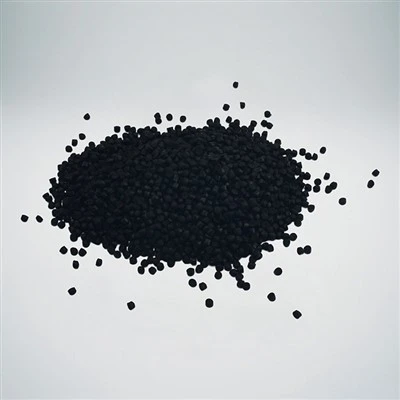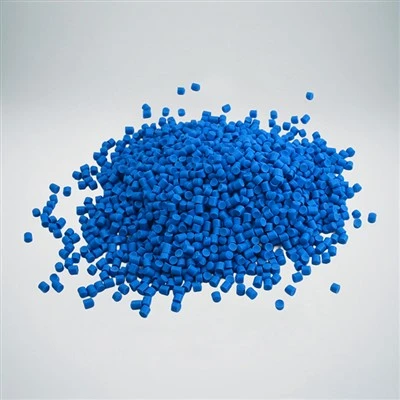

Compared to the superseded YD/T 760-1995 standard, the YD/T 760-2023 standard introduces several key revisions: the material scope has expanded from "indoor communication cables" to "all communication cables"; the classification system has grown from four categories of medium-density materials to include six categories of physically or chemically foamed materials; and the performance specifications have increased from 12 to 19 test requirements.
The standard categorizes insulation materials into two primary technical types: solid insulation materials and foamed insulation materials. Solid insulation materials encompass four base material series: LDPE, LLDPE, HDPE, and PP. Foamed insulation materials are further subdivided based on the foaming process into physical foaming and chemical foaming categories.
Regarding key performance indicators, the volume resistivity requirement is ≥1×10¹⁵ Ω·m for solid insulation materials and ≥1×10¹⁴ Ω·m for foamed insulation materials. The requirement for oxidation induction time is ≥30 minutes for solid insulation materials and ≥20 minutes for foamed insulation materials. Foamed insulation materials also carry a requirement for the degree of foaming, specified within the 40–60% range.
HDPE/P-type materials, characterized by a dielectric constant of ≤1.55, are widely used in the manufacture of leaky cables for 5G base stations. In data center cabling systems, PP/F-type chemically foamed polypropylene materials offer advantages such as foaming degree stability within ±2%, resistance to thermal stress cracking for ≥96 hours, and excellent compatibility with filling compounds.
In terms of quality control, melt flow rate testing requires strict differentiation of test temperatures for polyethylene and polypropylene. For foamed materials, the proportion of unfoamed granules must be monitored and kept at ≤3%. Testing for restricted substances must cover six categories of heavy metals (including lead and cadmium) and four types of phthalates.