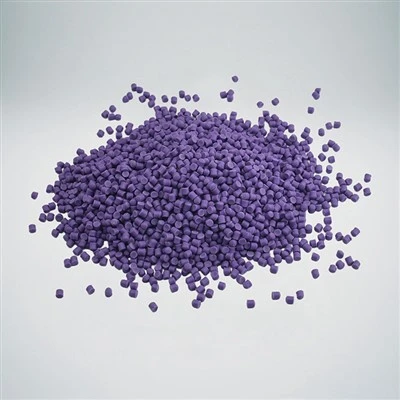
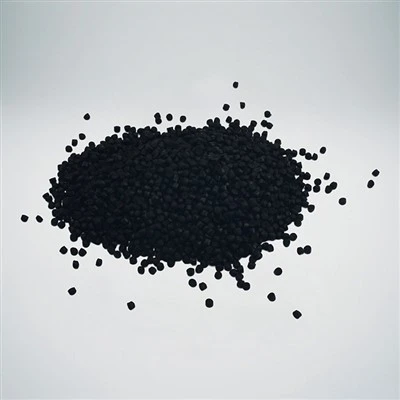
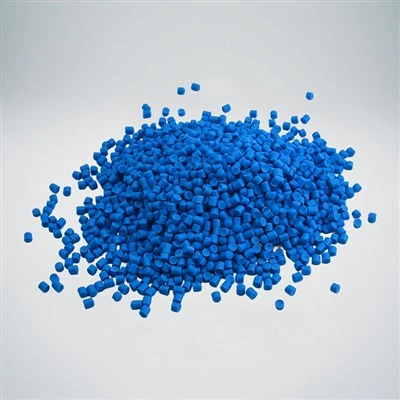
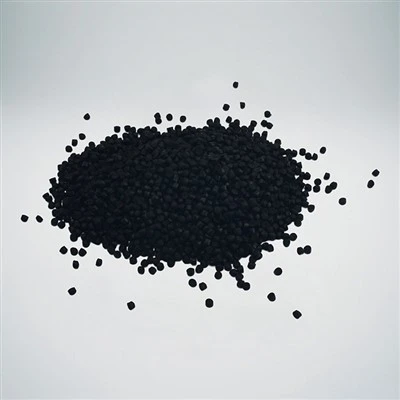
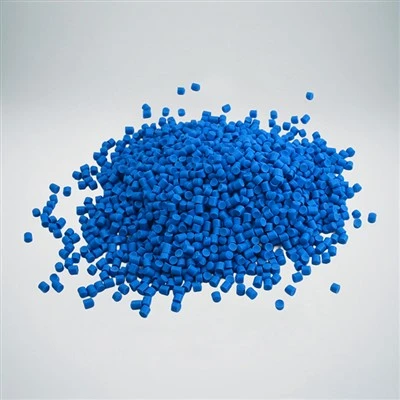
The production process for color masterbatch is rigorous and typically employs a wet process. The material undergoes aqueous-phase grinding, phase inversion, washing, drying, and pelletizing; only through this sequence can product quality be guaranteed.
Additionally, during the grinding stage, a series of tests must be conducted, such as measuring the fineness and solid content of the ground slurry, assessing the slurry's dispersion properties, and checking the fineness of the color paste.
There are four methods for producing color masterbatch:
(1) Ink Method: As the name implies, this method utilizes ink-style color paste. It involves using a three-roll mill to coat the pigment particles with a low-molecular-weight protective layer. The finely ground color paste is then mixed with a carrier resin, plasticized using a two-roll mill (also known as an open two-roll mill), and finally pelletized via a single-screw or twin-screw extruder.
(2) Flushing Method: Pigments, water, and dispersants undergo sand milling to reduce pigment particle size to less than 1 μm. Through phase inversion, the pigment is transferred into an oil phase, followed by drying to produce the color masterbatch. Phase inversion requires organic solvents and corresponding solvent recovery equipment. The process flow is as follows:
Fine color paste flushing → Evaporation/concentration → Drying → Addition of carrier → Extrusion/pelletizing
(3) Kneading Method: Pigments are mixed with an oil-based carrier. Leveraging the lipophilic (oil-loving) nature of the pigments, a kneading process transfers them from the aqueous phase into the oil phase. Simultaneously, the oil-based carrier encapsulates the pigment surfaces, ensuring stable dispersion and preventing pigment agglomeration. (4) Metal soap method: After the pigment is ground to a particle size of approximately 1 μm, a soap solution is added at a specific temperature to uniformly wet the surface of each pigment particle, forming a saponified layer. Upon the subsequent addition of a metal salt solution, a chemical reaction occurs with this saponified layer to generate a protective metal soap coating (e.g., magnesium stearate); this prevents the finely ground pigment particles from flocculating, thereby preserving their fine particle size.

 English